
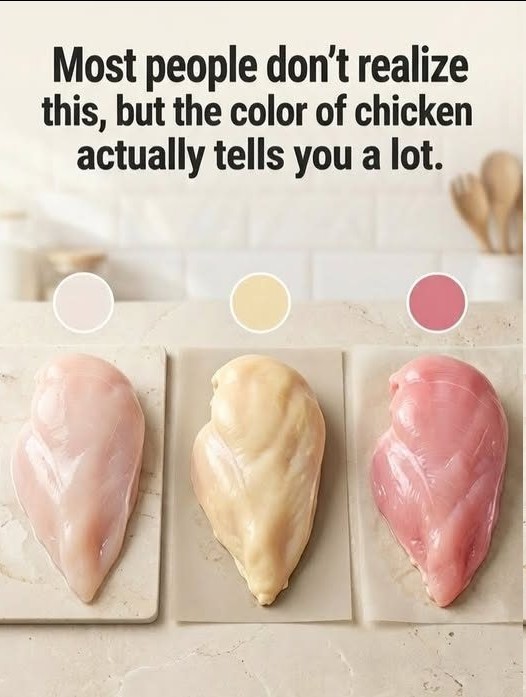
A Colorful Choice in the Meat Aisle
That chicken in your cart may be hiding more than you think. One package looks pale and almost pinkish. Another glows with a deep yellow tone. Same cut. Same price range. Very different appearance. It is natural to wonder what that difference really means. Is one pumped full of chemicals. Is the other healthier. Or is the color simply clever marketing playing with your expectations.
At first glance, color feels important. Humans instinctively judge food by appearance, and meat is no exception. But when it comes to chicken, color rarely tells a simple story of good or bad. Instead, it offers clues about how the bird was raised, what it ate, and how it lived before reaching the shelf.
see continuation on next page
Pale chicken is usually the product of modern commercial farming. These birds are bred to grow quickly and efficiently. Their diet is carefully controlled and optimized for rapid weight gain. They spend much of their lives indoors with limited movement. This system produces large volumes of affordable meat in a short time, which is why pale chicken dominates most grocery stores. The lighter color does not necessarily mean the meat is unsafe or unhealthy, but it does reflect a life built around efficiency rather than natural behavior.


